
Money decisions happen every day.
Each purchase creates a small financial choice. Some choices strengthen stability. Others quietly weaken it.
However, most people rarely question their spending habits.
Instead, they spend automatically.
As a result, many people feel guilt after buying things. Even normal purchases can trigger doubt.
Fortunately, a simple concept can remove this confusion.
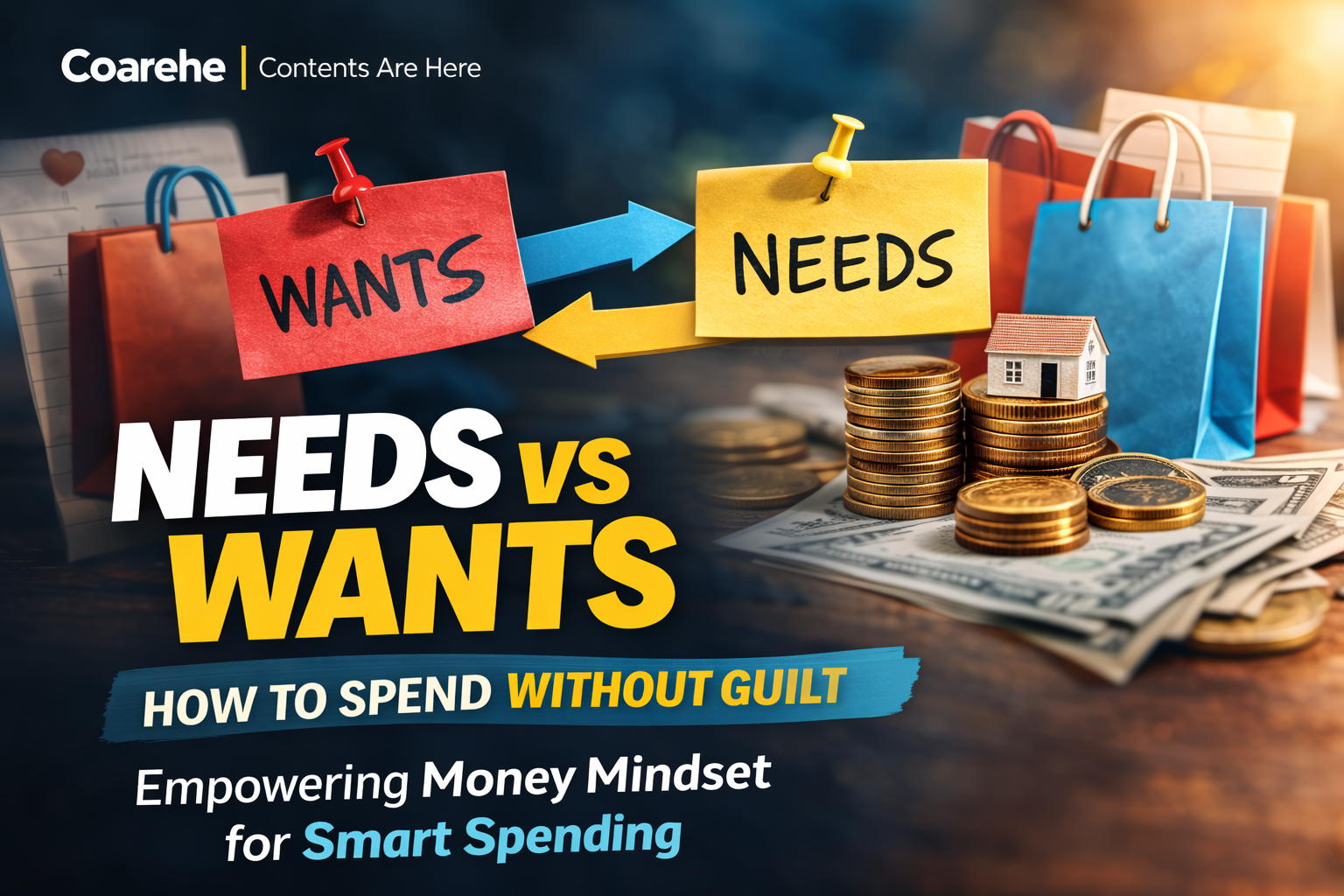
That concept is needs vs wants.
Once you understand this idea, spending becomes easier. Your financial decisions become clearer.
More importantly, your relationship with money improves.
Many people believe financial success requires strict discipline.
However, healthy money habits rarely depend on restriction alone.
Instead, they depend on awareness.
This is where the needs vs wants mindset becomes powerful.
Needs support survival and stability. Wants improve comfort and enjoyment.
Both categories have value.
However, balance remains essential.
When people ignore this balance, spending becomes chaotic.
Consequently, money disappears quickly.
Yet when people understand needs vs wants, spending becomes intentional.
Therefore, financial confidence grows naturally.
Needs represent essential expenses.
These expenses protect daily living conditions.
Housing remains one of the most obvious needs.
Food also falls into this category.
Transportation supports work, family life, and daily responsibilities.
Healthcare protects physical well-being.
Utilities such as electricity and water also qualify as needs.
Without these essentials, life becomes unstable.
However, confusion often appears inside these categories.
For example, shelter is a need.
Yet luxury housing usually represents a want.
Similarly, transportation is necessary.
However, expensive vehicles often exceed practical requirements.
Therefore, smart spenders evaluate needs carefully.
They prioritize stability first.
Wants improve quality of life.
They provide comfort, entertainment, and enjoyment.
For example, vacations, new gadgets, and premium clothing represent wants.
Dining at restaurants also falls into this category.
Streaming services and entertainment subscriptions qualify as wants as well.
These purchases are not negative.
In fact, they often make life enjoyable.
However, problems appear when wants dominate spending.
When wants replace needs, financial stress increases.
Debt often follows this pattern.
Therefore, understanding needs vs wants helps protect financial stability.
At the same time, it allows room for healthy enjoyment.
Modern culture often blurs the line between needs and wants.
Marketing plays a powerful role in this confusion.
Advertisements constantly suggest that luxury equals necessity.
Consequently, consumers begin to believe these messages.
Social influence also affects spending behavior.
People naturally compare themselves with others.
When friends upgrade phones or cars, the pressure grows.
As a result, wants slowly transform into perceived needs.
Emotional spending also contributes to confusion.
Stress, boredom, or excitement can influence purchases.
Therefore, awareness becomes the first step toward smarter spending.
Once people recognize these influences, they regain financial control.
The needs vs wants rule provides structure.
Without structure, spending becomes impulsive.
However, structured spending encourages thoughtful decisions.
First, people identify their essential expenses.
Next, they separate lifestyle upgrades from necessities.
This process immediately clarifies priorities.
Consequently, financial decisions become easier.
Instead of guessing, people evaluate purchases logically.
Furthermore, the rule reduces emotional pressure.
Spending feels purposeful rather than random.
Over time, this approach builds financial confidence.
Financial experts often recommend a balanced spending strategy.
This approach divides income into three simple categories.
First come needs.
These expenses usually receive the largest portion of income.
Next come wants.
These purchases receive a smaller portion.
Finally, savings and investments receive the remaining funds.
This structure protects financial stability.
At the same time, it allows personal enjoyment.
More importantly, it encourages long-term financial growth.
Although percentages may vary, the principle remains powerful.
Balanced spending creates financial freedom.
Many people experience guilt after spending money.
However, guilt usually appears when spending lacks intention.
Planned spending removes this problem.
First, list essential needs clearly.
This list may include housing, food, transportation, and healthcare.
Next, identify lifestyle wants.
These may include hobbies, entertainment, and upgrades.
Then create spending limits for both categories.
This step ensures balance.
When purchases follow a plan, guilt disappears.
Instead, spending feels responsible and controlled.
Consequently, financial peace replaces financial anxiety.
Real-life examples make the concept easier to understand.
Groceries represent a basic need.
However, expensive restaurant dining usually qualifies as a want.
A reliable phone may support communication needs.
Yet the newest premium smartphone often becomes a want.
Transportation is necessary for many people.
However, luxury vehicles often exceed functional needs.
Internet access often supports work and communication.
However, multiple entertainment subscriptions fall into the wants category.
These examples show a simple truth.
Needs support life.
Wants enhance life.
Recognizing this difference strengthens financial judgment.
Spending habits shape long-term financial outcomes.
When wants dominate spending, savings decline quickly.
Consequently, financial growth slows.
However, disciplined spending changes this pattern.
When people control wants, they create financial breathing room.
This extra space allows saving and investing.
Over time, investments grow steadily.
Small contributions eventually create large results.
Therefore, understanding needs vs wants directly supports wealth building.
Financial success often begins with smart spending habits.
Money often triggers emotional reactions.
Some people feel anxiety about spending.
Others feel regret after purchases.
However, intentional spending removes this tension.
When people understand their priorities, spending becomes easier.
Needs receive protection first.
Wants receive space afterward.
Therefore, balance replaces conflict.
This balance creates psychological freedom.
People enjoy their money without fear.
As a result, their financial mindset becomes healthier.
Financial growth depends on consistent habits.
Fortunately, simple habits create powerful results.
First, review spending regularly.
Monthly reviews reveal patterns quickly.
Next, question each purchase.
Ask whether the purchase supports a need or a want.
Then track financial goals.
Clear goals increase motivation.
Finally, adjust spending when necessary.
Small improvements create long-term change.
Over time, these habits transform financial behavior.
Financial power begins with awareness.
People who understand their spending habits make stronger decisions.
They protect their needs first.
At the same time, they allow space for enjoyment.
Therefore, money becomes a tool rather than a source of stress.
This mindset creates financial balance.
Life includes responsibility and pleasure.
Smart spending allows both to exist together.
Consequently, the needs vs wants mindset becomes a foundation for financial success.
Financial clarity changes everything.
When people understand needs vs wants, they gain control over spending.
They make decisions with purpose.
They eliminate unnecessary guilt.
Most importantly, they align money with personal priorities.
Over time, this awareness builds confidence, stability, and wealth.
Smart spending does not eliminate joy.
Instead, it creates freedom.
And once spending becomes intentional, financial stress begins to disappear.